Published on July 6, 2026 by the Chesapeake Bay Trust
We have become aware that unauthorized individuals are sending fraudulent emails, text messages, and other communications that falsely appear to come from the Chesapeake Bay Trust.
These messages may use our company name, logo, branding, or address in an attempt to trick recipients into providing personal information, making payments, downloading malware, or clicking malicious links.
These communications are not affiliated with the Chesapeake Bay Trust.
Sample:
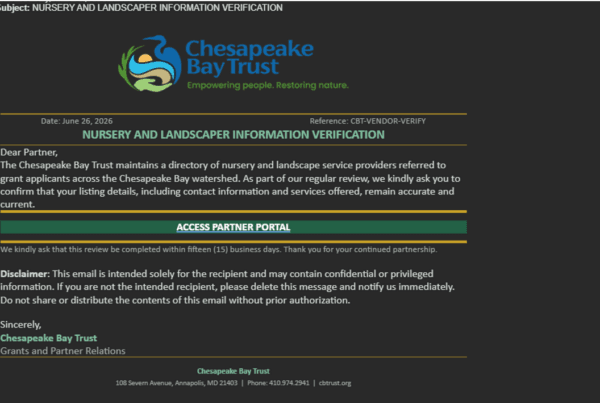
How to Identify Suspicious Messages
Be cautious if a message:
- Requests passwords, account credentials, verification codes, banking information, or other sensitive data.
- Creates a sense of urgency, such as threatening account closure or demanding immediate action.
- Contains unexpected attachments or links.
- Comes from an email address that does not exactly match our official company domains.
- Includes spelling, grammar, or formatting errors.
- Promises unexpected prizes, refunds, invoices, employment opportunities, or financial incentives.
What Communications We Will Never Send
The Chesapeake Bay Trust will never:
- Ask for your password via email, text message, or phone.
- Request multi-factor authentication (MFA) codes.
- Ask you to send payment to an unexpected account.
- Pressure you into immediate action using threats or scare tactics.
- Request sensitive personal information through unsolicited communications.
Verify Before You Act
If you receive a message claiming to be from the Chesapeake Bay Trust that you were not expecting:
- Do not click any links or open attachments.
- Do not provide personal or financial information.
- Verify the communication through our official website or publicly listed contact information.
- Contact us directly if you are unsure whether a message is legitimate.
Examples of Known Phishing Indicators
Fraudulent messages may:
- Use our logo without authorization.
- Mimic our branding and website appearance.
- Link to websites that resemble our official site but use different domain names.
- Claim to represent our customer service, billing, human resources, or executive teams.
Always verify the sender’s email address and web domain carefully.
Report a Suspicious Message
If you believe you have received a phishing email, text message, or other communication impersonating the Chesapeake Bay Trust please report it to:
Email: grantadmin@cbtrust.org
When possible, include:
- The sender’s address or phone number
- Screenshots of the message
- Any links or attachments received
- The date and time of the communication
Have You Already Responded?
If you have already clicked a link, downloaded an attachment, or shared sensitive information:
- Change affected passwords immediately.
- Enable multi-factor authentication where available.
- Contact your bank or financial institution if payment information was disclosed.
- Run a security scan on your device.
- Report the incident to your local authorities or appropriate cybersecurity reporting organization.
Our Commitment
Protecting our partners and community is a top priority. We actively monitor and report fraudulent use of our name and branding and appreciate your assistance in helping identify and prevent scams.